
How to Best Utilize Recommendations
This guide walks through the end-to-end workflow for reviewing, refining, and organizing your recommendations into actionable plans.
If you haven't generated recommendations yet, start with Generating Recommendations. If you need to add business context to improve recommendation quality, see Adding Context.
Step 1: Review Your Recommendations
After generating recommendations, navigate to the Recommendations tab in the left sidebar. The recommendations list displays each recommendation with its Title, Benefit categories, ROI, Investment, and Complexity.
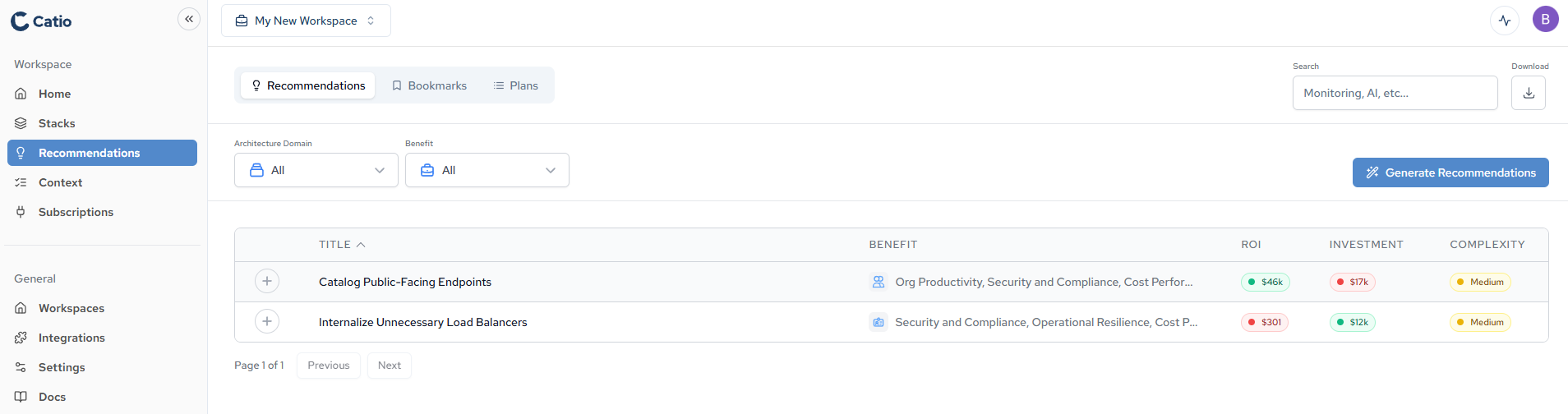
Filtering and Searching
Use the controls at the top of the page to narrow down your recommendations:
- Search: Enter keywords in the search bar to locate recommendations by component or system name.
- Architecture Domain: Filter by domain (Infrastructure, API, Data Architecture, IAM, Monitoring, etc.) to focus on a specific technical area.
- Benefit: Filter by benefit category (Cost Optimization, Robustness, Efficiency, Org Productivity, Security and Compliance, etc.) to align with a specific business outcome.
Previewing a Recommendation
Click any recommendation row to expand it and view a short description of what the recommendation addresses. Click View Full Recommendation to open the full detail page.

Step 2: Understand the Full Recommendation
The full recommendation page provides a structured breakdown of what needs to change, why, and how. Use the On this page navigation on the right side to jump between sections.
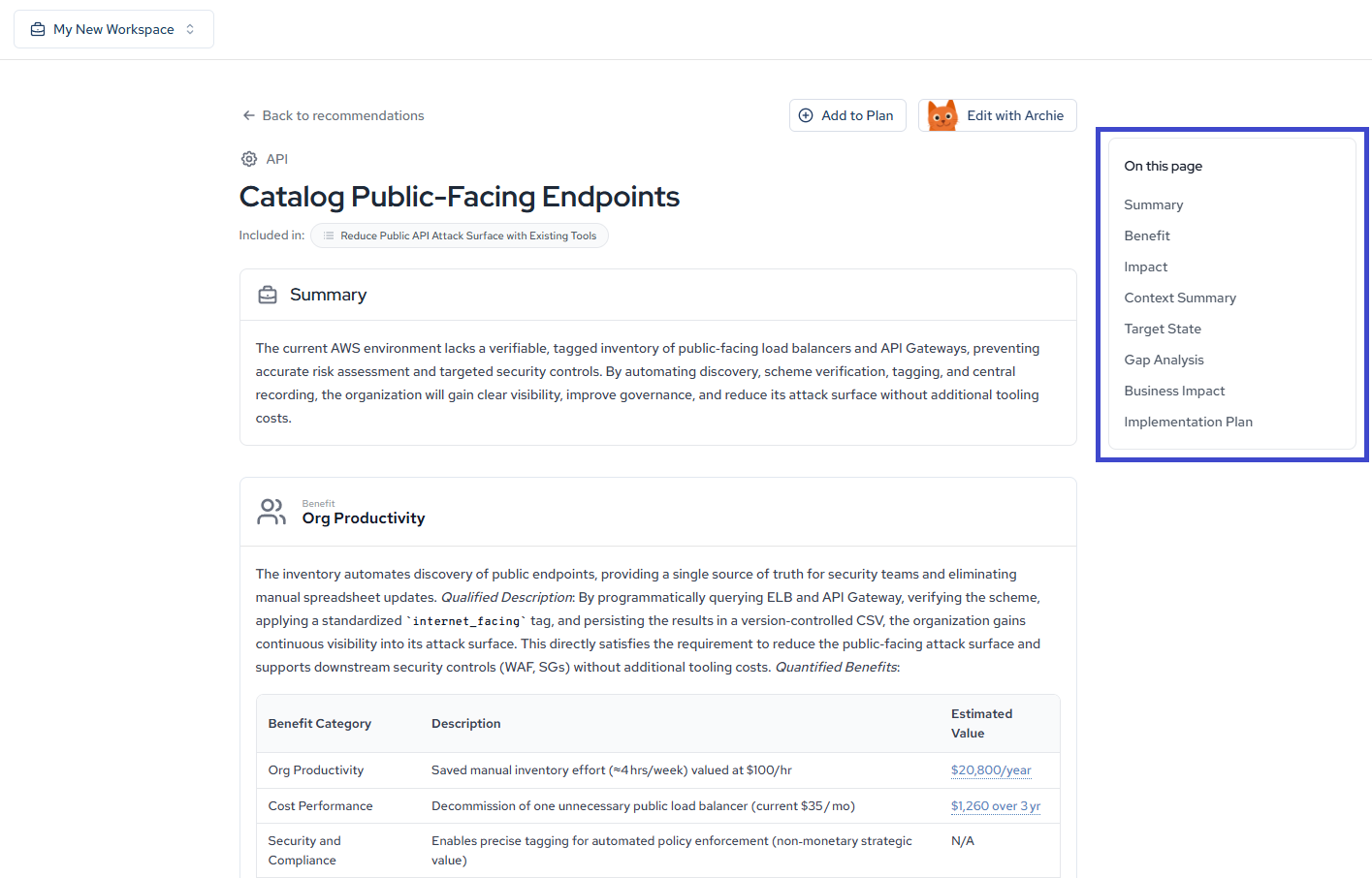
Each recommendation contains the following sections:
Summary
A high-level description of the recommendation, including what the current gap is and what the proposed improvement achieves.
Benefit
The primary benefit category (e.g., Org Productivity, Cost Performance, Security and Compliance) with a qualified description of the value and a table of quantified benefits where applicable. Each benefit entry includes a Benefit Category, Description, and Estimated Value.
Impact
An assessment of the business and operational impact if the recommendation is implemented or ignored.
Context Summary
A summary of the workspace context entries that informed this recommendation, linking it back to the requirements and constraints you defined.
Target State
The proposed end-state architecture. This includes a Solution Overview describing the recommended configuration and Key Architectural Changes listing the specific components being introduced or modified.
Gap Analysis
The delta between your current architecture and the proposed target state. This section identifies what is missing, misconfigured, or suboptimal, organized by Affected Components and Architecture Domain Coverage.
Business Impact
A breakdown of the expected financial and operational impact, including estimated ROI, investment cost, and benefit value.
Implementation Plan
A phased sequence of actions to move from your current state to the target state. Each phase specifies the services to deploy, configurations to apply, and the context entry it satisfies. Read the phases as a sequencing guide, not a runbook — validate each phase against your existing change management processes and sprint capacity before scheduling work.
Step 3: Refine with Archie
From any full recommendation page, click Edit with Archie in the top right to open Archie's chat interface. Archie can update the recommendation to account for additional constraints, priorities, or technical considerations you provide.
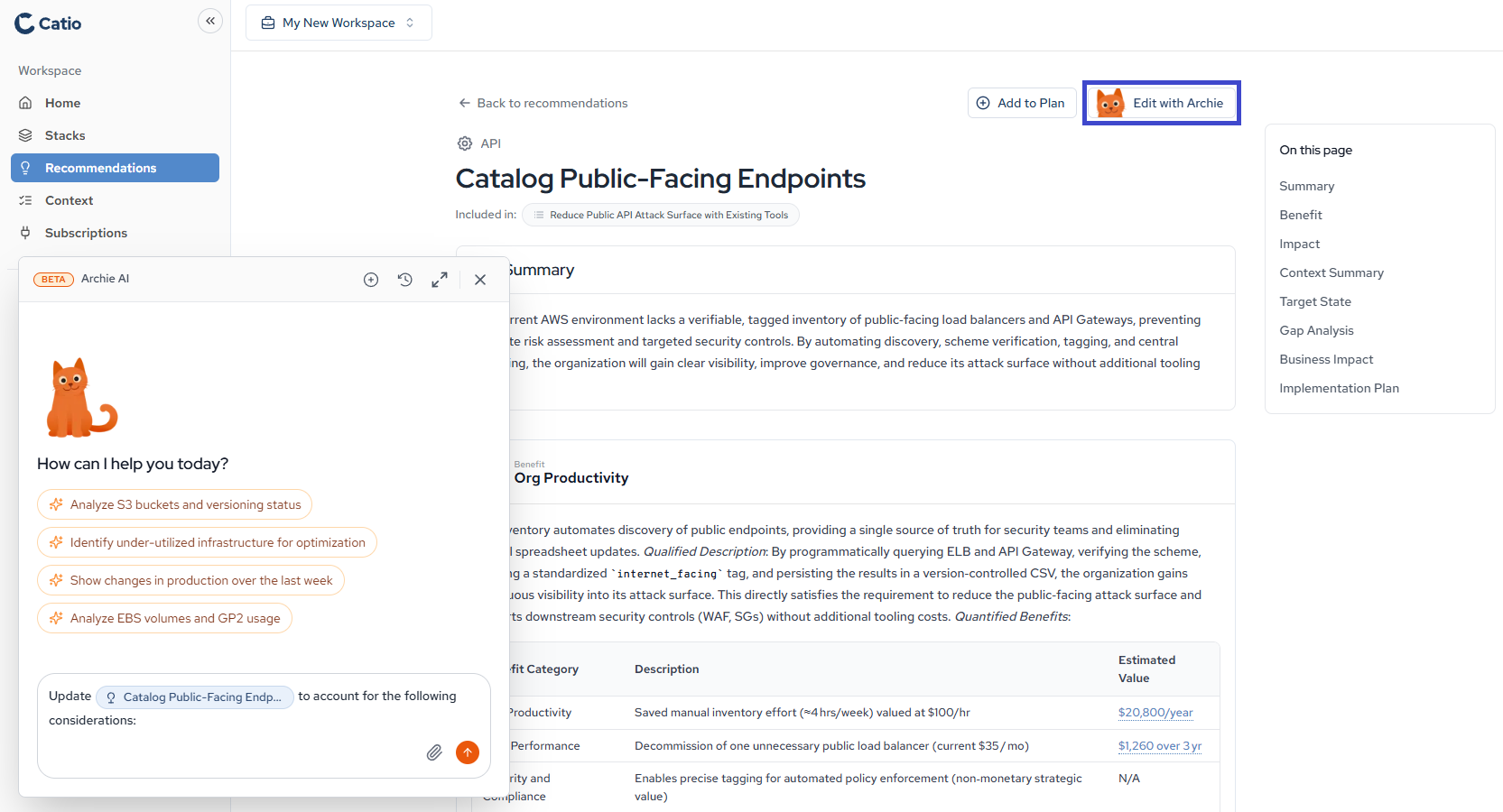
Type your refinement instructions in the prompt field.
Archie will revise the recommendation in place based on your input. You can also use the suggested prompts Archie provides, such as analyzing specific resource types or identifying optimization opportunities.
Step 4: Organize into Plans and Bookmarks
Once you've reviewed and refined your recommendations, organize them for execution.
Adding to a Plan
From the full recommendation page, click Add to Plan in the top right. A dropdown displays your existing plans and the option to select Bookmarks. Select the plan you want to add the recommendation to, then click Done.
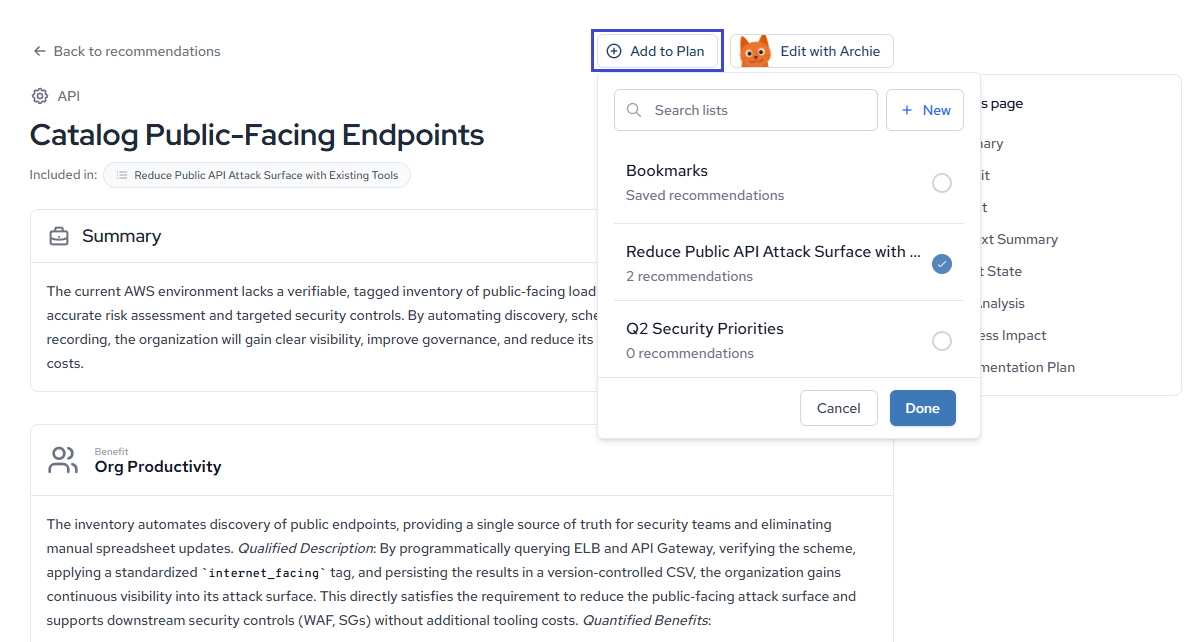
If you haven't created a plan yet, see Creating a Plan for instructions on setting up AI-generated or manual plans.
Bookmarking
Select Bookmarks from the same Add to Plan dropdown to pin the recommendation for quick reference. Bookmarked recommendations are accessible from the Bookmarks tab in the Recommendations module.
Bookmarks and Plans function independently. Bookmarking a recommendation does not add it to a plan, and adding a recommendation to a plan does not bookmark it.
Step 5: Manage Your Plans
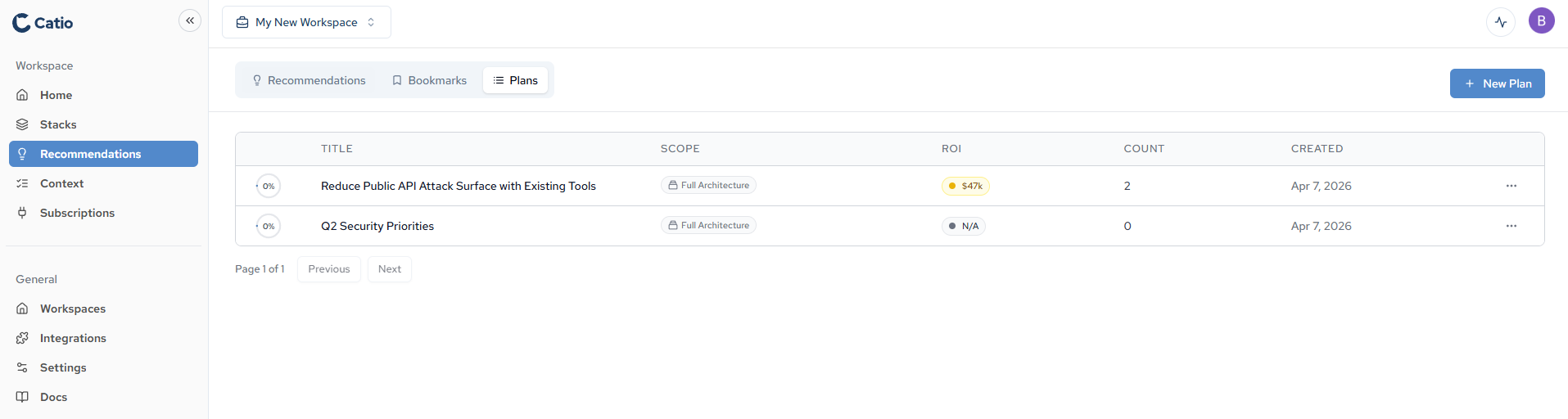
Navigate to the Plans tab to see all your plans. Each plan displays its Title, Scope, ROI, recommendation Count, and Created date.
Inside a Plan
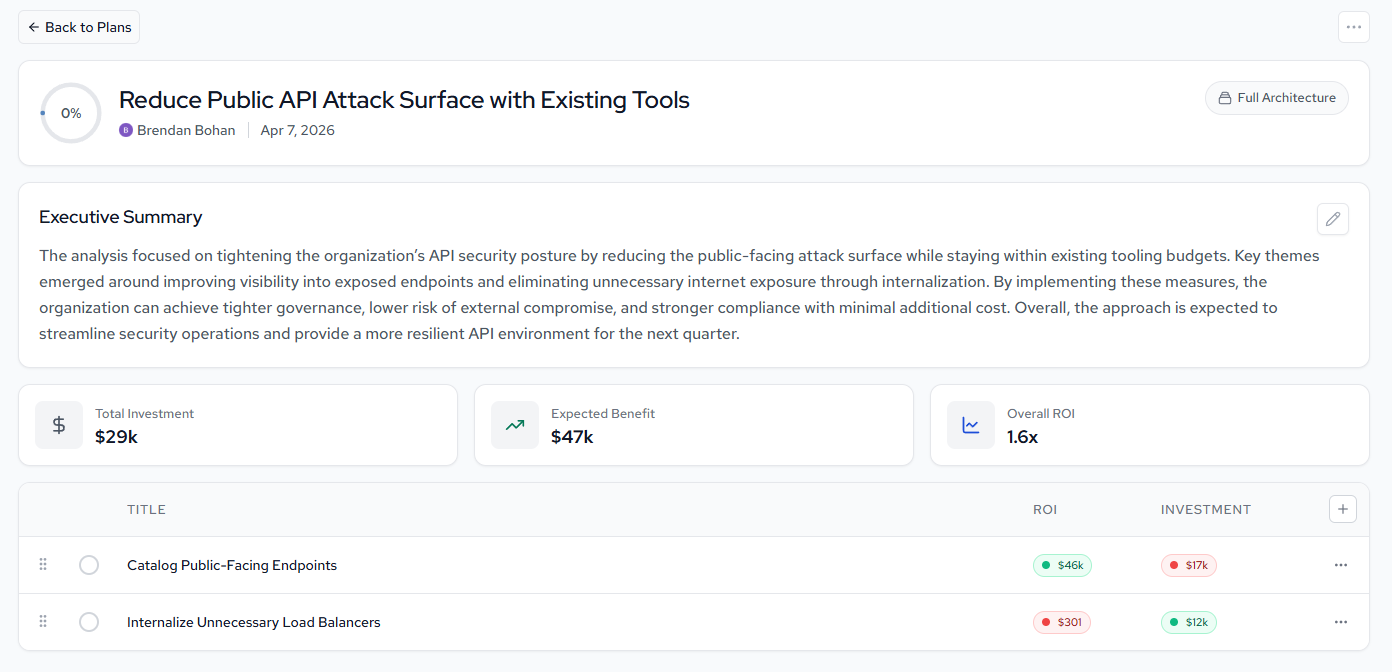
Click into a plan to view its detail page. Each plan includes:
- Completion percentage: Tracks progress as recommendations are marked complete.
- Executive Summary: An AI-generated summary of the plan's scope and expected outcomes. Click the edit icon to customize.
- Financial overview: Total Investment, Expected Benefit, and Overall ROI calculated from the included recommendations.
- Recommendation list: All recommendations in the plan with their individual ROI and Investment values. Use the + button to add more recommendations, or the ... menu on each row to remove or manage individual items.
Adding Recommendations to an Existing Plan
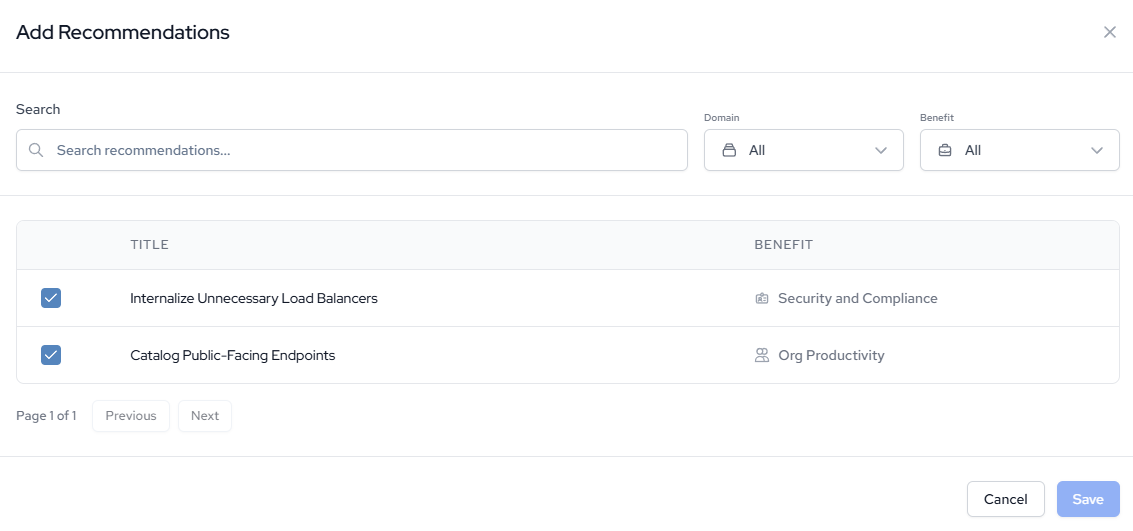
From inside a plan, click the + button in the recommendation list header to open the Add Recommendations modal. Use the search bar and Domain/Benefit filters to find and select recommendations, then click Save.
Viewing the Full Architecture
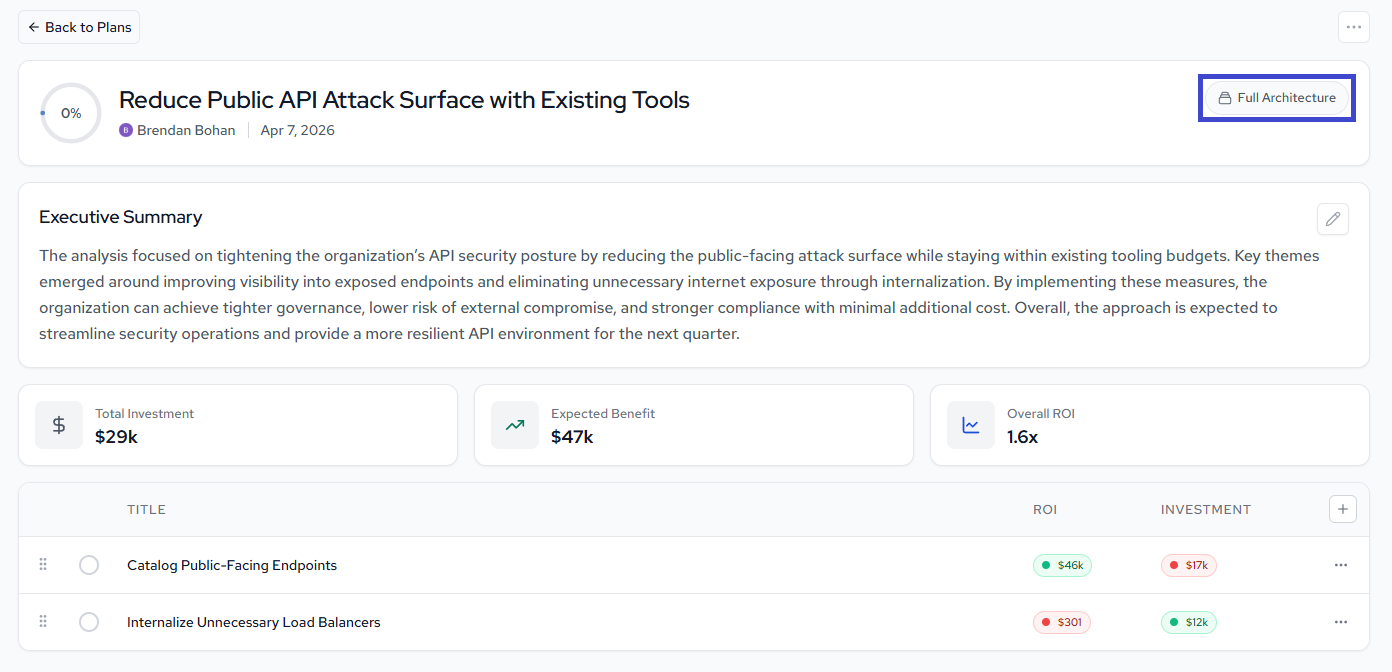
From any plan detail page, click Full Architecture in the top right to transition into Stacks, where you can see the full architectural context for the components addressed by the plan's recommendations.
Putting It Together
Here's a typical workflow for a team using recommendations to drive architectural improvements:
- Generate recommendations based on your architecture and business context (see Generating Recommendations).
- Review and filter the recommendation list by domain or benefit to focus on your current planning cycle.
- Open full recommendations to understand the target state, gap analysis, and implementation plan for each.
- Refine with Archie to adjust recommendations for your team's specific constraints and timelines.
- Organize into plans by creating AI or manual plans and adding relevant recommendations.
- Track progress by reviewing plan completion and updating recommendation statuses as work is implemented.
- Communicate with stakeholders using the plan's executive summary, financial metrics, and completion tracking.
Updated 9 days ago